
Curiosity
Ageing, vulnerability and remaining open to what life may still reveal

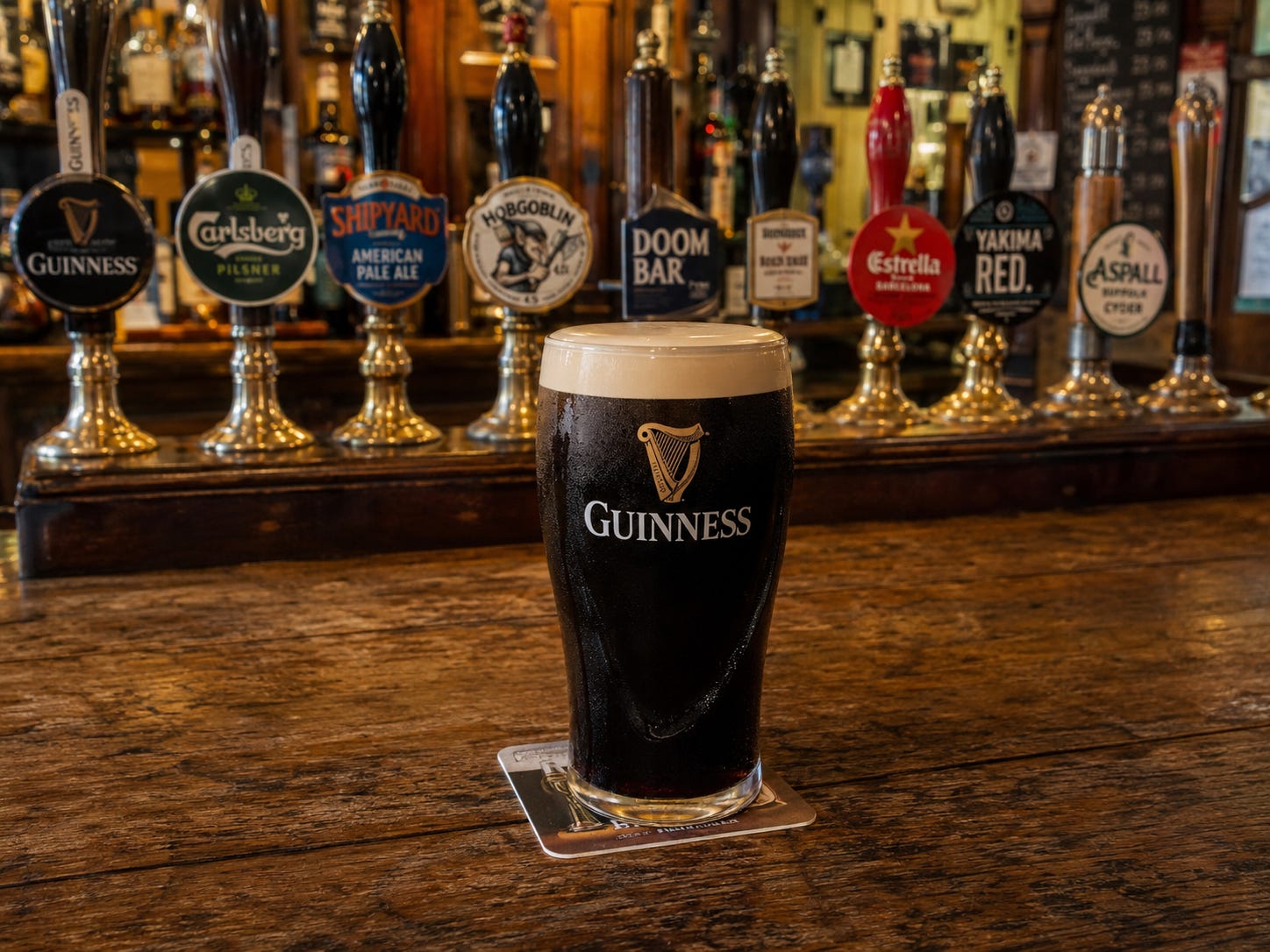
For most of my life, I drank Guinness. But whenever someone asked me what my favourite beer was, my answer was usually the same: The one I haven’t tried yet.
I was being playful, of course. But the truth is, I meant it.
The worst that could happen was that I would dislike it and never order it again. But what if it became my new favourite?
My point here, and of this entire article in fact, has little to do with beer or personal preferences. It is about the desire to find out. Curiosity.
For as long as I can remember, I have found it difficult to understand why, when the cost of trying something is so small, some people feel no apparent desire to know. Just the other day, I watched a man at a shawarma counter immediately refuse a taste of a new sauce the server offered, seemingly with hope in his eyes. He may simply have known what he liked of course. What caught my attention was not that he said no, but how quickly the no arrived, before there was even a pause.

Why do some of us want to find out while others appear content to close the door before they know what is behind it?
Now before I divide humanity into two categories — adventurous saints and people who order the same familiar dish at the same familiar restaurant — let me clarify what I mean.
I am not arguing that novelty is inherently virtuous, that familiar pleasures are inferior, or that every invitation deserves a yes. Preferences are legitimate. Discernment matters. Familiar rituals can be beautiful. I am, after all, a sommelier. I know the grape varietals and wine regions I typically prefer. But even then, I try to remain open to discovering a wine I did not expect to enjoy.
My question is much more subtle: Is the no a considered preference, or did it arrive before curiosity had any opportunity to enter?
I am not remotely puzzled that someone might prefer the beer they know. Habits can just be habits and can be left at that. And there can be countless reasons behind refusals. I am more puzzled by the absence of any desire to discover whether something else might delight them.
And the more I think about it, the less certain I am that the real inquiry is external.
Perhaps the question is not: Why won’t they try it?
Perhaps it is: Why do any of us close down so quickly?
What is happening beneath the no? What might we be protecting?
My curiosity is no longer directed only at the unfamiliar beer, food, language, person, perspective or experience. It is directed at the resistance itself.
Curiosity does not only ask us to investigate the unknown.
It asks us to investigate our refusal of it.
This is where my Jungian bias enters the picture. Not simply the what, but the why.
Why did that proposal unsettle me? Why did I dismiss that person? Why do I need to prove this wrong immediately? Why does trying something unfamiliar feel threatening? Why am I defending my reaction rather than examining it?
My hunch is that sometimes we do not ask those “why?” questions because the answer may require something from us: uncertainty, effort, an admission, a change of mind or simply the willingness to be bad at something for a while. At times, it may even ask us to reconsider who we believe ourselves to be.
That is where curiosity becomes more complicated than trying a different beer. The beer asks almost nothing of us. When something unsettles us, curiosity asks only that we pause before treating our first reaction as the final truth.
To stay with those questions requires vulnerability, because the answer may expose something we do not particularly like. It also requires courage, not necessarily to act immediately, but to remain open long enough to hear what the answer may be. Beneath both, perhaps, is a more basic trust that whatever we discover, we will remain intact.
Learning something new in public offers a simple example. People may learn another language because they need it for work or travel, yet avoid practising whenever possible because they feel rusty, uncomfortable or simply not very good. The deeper question is not whether they will make mistakes, but what they imagine those mistakes will reveal about them.
A secure person can still care what others think. They may blush, stumble over a word or feel embarrassed by an awkward sentence or an incorrectly conjugated verb. Security does not eliminate social feeling. But it allows the experience to remain local, so to speak.
I sounded foolish for a moment, or I made a mistake, but I remain intact.
Shame, on the other hand, turns the same moment into something much larger. It no longer feels as though I merely sounded foolish. It feels as though the moment revealed that I am foolish.
Embarrassment attaches itself to what happened.
Shame attaches itself to who we believe we are.
When our self-worth depends heavily upon appearing intelligent, competent or polished, becoming a beginner can feel dangerous. A mistake does not feel like something we did. It feels like evidence of something fundamentally inadequate in us.
I understand that protective impulse more than I once realised.
There was a time when saying something awkward, admitting uncertainty or exposing embarrassment carried much greater threat for me. Admitting that I had made financial mistakes as an adult, chosen the wrong partners, trusted too quickly or misjudged someone could feel like more than acknowledging an error. It could feel like an indictment.
When I sold my company years ago, for example, it took me a long time to admit that I had been taken advantage of. I had my share of responsibility, sure. I moved too quickly and trusted too much. But acknowledging that felt, for a long time, as though I were revealing something shameful about my self.
Therapy in my 40s helped me address the deeper question of self-worth. It did not make me indifferent to embarrassment. It simply made embarrassment more survivable and easier to admit.
Today, I can say that I am embarrassed by some of the mistakes I made without believing I should be ashamed of myself for having made them. I can see them as errors, including painful ones, rather than evidence that something was wrong with me as a person.
I still hesitate. I simply hesitate less. Perhaps that is what practice does. Each time I remain with the discomfort instead of retreating from it, the old reflex loses a little of its authority.
I can now sometimes say the thing before the old protective machinery has time to close the hangar doors. I can more easily admit that I feel embarrassed and discover, once again, that embarrassment is remarkably survivable when it is no longer carrying the full weight of shame.
And, somewhat ironically, acknowledging my mistakes probably makes me appear more trustworthy, not less.
Perhaps curiosity, especially when directed inward, requires a basic trust that what we discover will not undo us. Not perfect confidence, indifference to judgment or the absence of fear. Just enough security to understand that being wrong does not make us worthless, looking foolish does not make us a fool, and trying something different, or changing our mind does not mean disappearing.
That security makes vulnerability easier. And each time we allow ourselves to be seen, feel the discomfort and discover that we remain intact, it becomes a little easier to stay open the next time.
Elizabeth Gilbert describes something similar in Eat, Pray, Love, calling it The Physics of the Quest:
“If you are brave enough to leave behind everything familiar and comforting … and set out on a truth-seeking journey, either externally or internally, and if you are truly willing to regard everything that happens to you on that journey as a clue … and if you are prepared, most of all, to face and forgive some very difficult realities about yourself … then truth will not be withheld from you.”
I have always loved that passage. But perhaps the quest begins even earlier, with the curiosity to wonder what lies beyond the familiar, or beneath our resistance to leaving it. And perhaps what allows us to begin is the trust that whatever we discover, out in the world or within ourselves, we will remain intact. We will land on our feet. We may even grow.
A life of contraction or expansion
Some people do not realise how gradually their lives contract as they age: fewer new choices, fewer unfamiliar experiences, fewer occasions on which they allow themselves to be surprised. Others keep widening the field, continuing to learn, explore and make room for what they do not yet know. Whether we become more closed or more open with age is not entirely within our control, but I believe more of it is a choice than we sometimes admit.
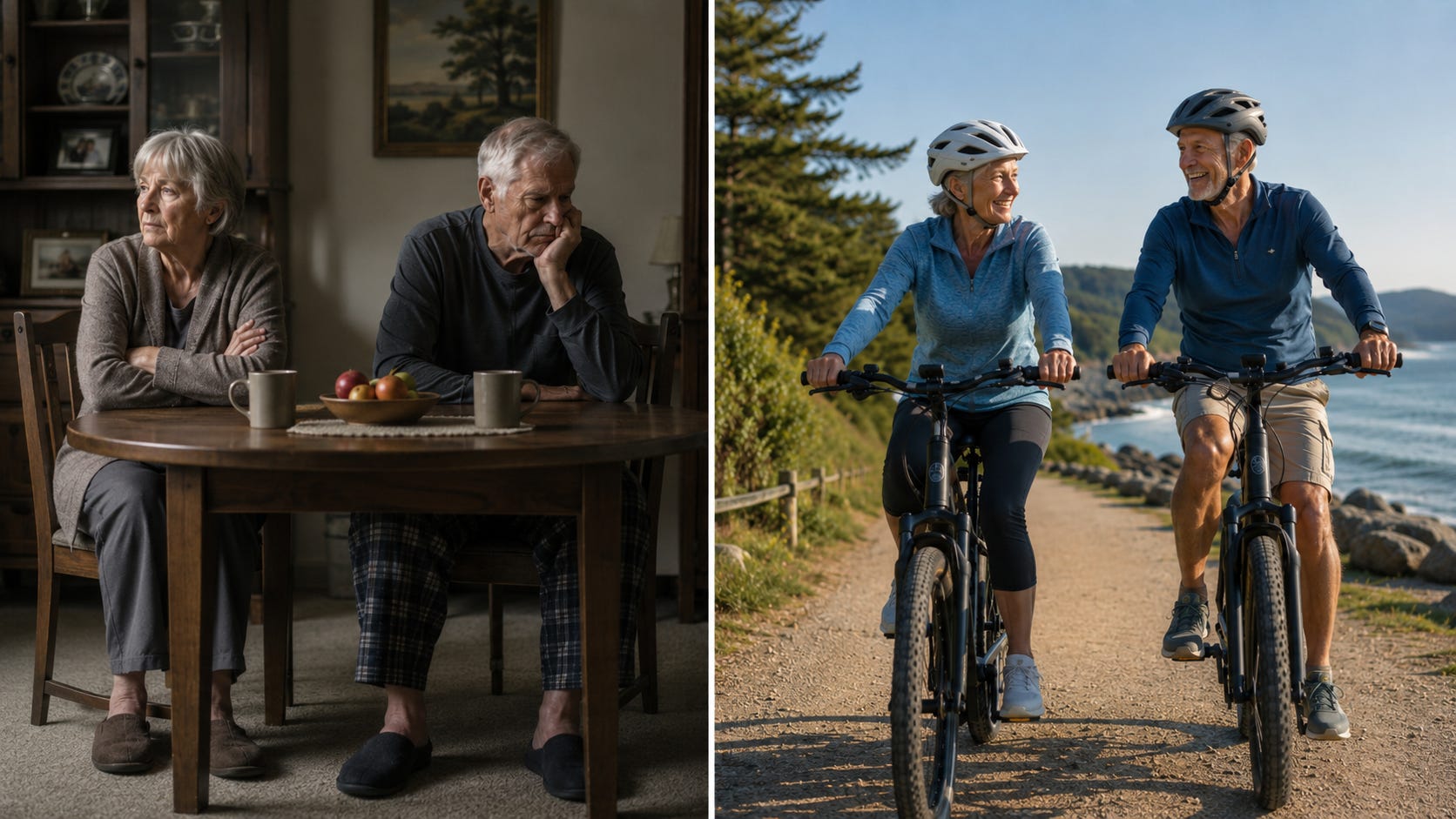
Perhaps it begins with making that choice consciously.
My daughter once told me that she finds it endearing that I remain open to unfamiliar things as I grow older, that I still want to learn. I told her I did not find it impressive so much as necessary.
I know what I do not want to become: categorical, closed, bitter, suspicious of whatever is new, convinced that accumulated experience has settled every important question, or someone who interprets a changing world only as negative deterioration. Of course, I still catch myself at times muttering some version of “The problem with kids today...” just as every generation before mine probably did.
But more importantly, I often wonder when age and experience stop helping us navigate the world and begin preventing us from encountering it. Knowledge and experience should give us discernment, sure. They should help us recognise danger, avoid repeating mistakes and make better decisions. But experience can also become armour. We can begin using what we know to protect ourselves from everything we do not.
I do not want age to become the point at which experience stops enlarging my world and begins defending me from it. Basically, I want my world to continue expand, not contract.
That does not mean I will enjoy every unfamiliar food, agree with every political argument or appreciate every new kind of music. Openness does not require agreement or enjoyment.
It requires enough humility to say: I may not understand this yet. I may have been wrong. Teach me. Let me try. Or perhaps more simply, I wonder.
My partner and I have discussed learning Spanish more thoroughly, partly because we have considered retiring in Spain. During our travels there over the past few years, I have been reminded that learning a new language is not merely useful. It asks us to accept limited vocabulary, public mistakes, awkwardness, slower thinking and a certain dependence upon others. We cannot always express the full intelligence, humour or nuance we possess in our first language. In other words, it requires us to stop being the competent person we are accustomed to being.
I am fully aware that I no longer learn with the seemingly effortless speed of a child. I can feel myself slowing down in certain ways, and I know that acquiring another language will take more repetition and patience than it might once have. But I refuse to turn that into another excuse. I truly believe you can teach an old dog new tricks. The old dog may simply have to work a little harder at them.
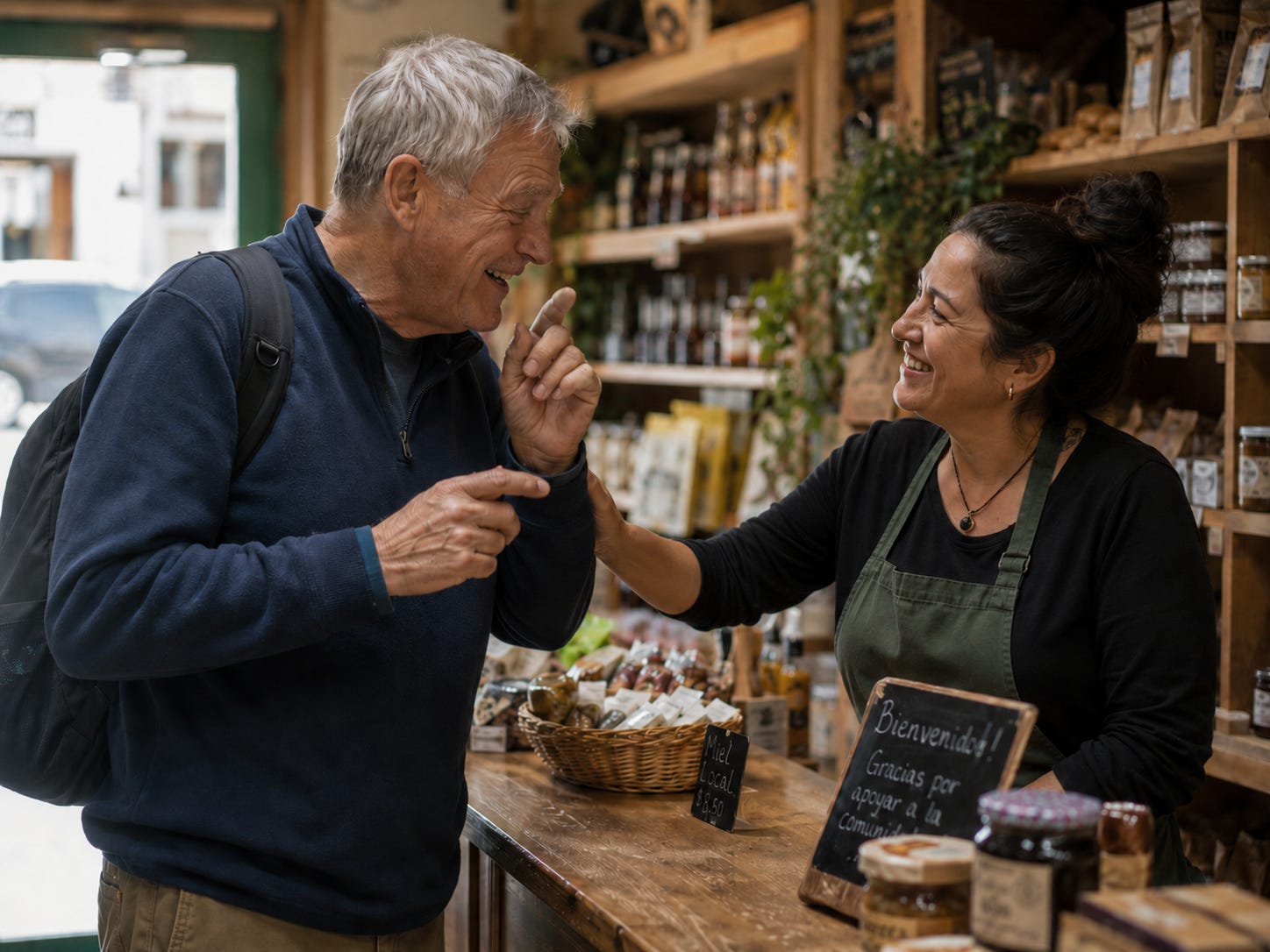
And that example touches on almost everything I am trying to get at here. Curiosity makes us want to learn, vulnerability allows us to sound foolish, and courage makes us speak anyway. Self-worth is what permits us to remain beginners without feeling diminished.
Lifelong learning is not merely about keeping the brain active, although that may be part of its value. It is a declaration that I am not finished learning, growing or living, that the world still contains things capable of changing me and that I remain available to surprise. Open. Curious.
There are languages, landscapes, foods, histories, people, arguments, books, music and ways of thinking that I will never have time to encounter. There may even be versions of myself I have not yet met.
Honestly? I find that amazing.
I am not suggesting that curiosity should become an efficiency project or a frantic bucket list. Nobody needs to squeeze the entire planet through a personal-development funnel.
The point is simply that life is already short. Fear, embarrassment and unexamined habit need not make it smaller still. We cannot discover everything. But would it not be sad to allow fear or certainty to reduce the field before time does it for us?
Trying a different beer is not heroic. It does not require profound self-examination. The stakes remain comically small. But that is precisely the point. The worst outcome is that you dislike it. You never need to drink it again.
But it may become your new favourite. And every unfamiliar experience, question or conversation contains some version of that possibility, not necessarily pleasure, but discovery.
You may learn that you dislike something and that your initial hunch was right.
But you may also learn that you were wrong. That you can survive embarrassment. That someone else sees something you could not. That a part of the world you had dismissed contains something for you.
Some doors should remain closed. Some beers are terrible. Some conversations are unproductive. Some invitations deserve refusal.
But before the “no” hardens, perhaps we can preserve the small interval in which curiosity asks:
Why am I resisting? What am I protecting? What might I discover? And what if I am capable of surviving the answer? We were curious as kids. Why not return to that?
The world remains impossibly large. Our time inside it does not.
The greater loss may not be disliking what we try.
It may be becoming someone who no longer wants to find out.
…for the record, I still drink Guinness.
This is such a beautiful piece, Marc. I was especially grateful for the time and attention you paid to why we as humans have a natural tendency to resist curiosity. To resist change. There is comfort in the familiar, even when we know it may no longer be serving us.
Reading this felt a little like being in the locker room at halftime, listening to exactly the motivational speech I needed before charging back out onto the field. A reminder to stay curious. To keep asking questions. To resist the temptation to believe that, by this point in our lives, we already know how the story goes.
Curiosity has become increasingly important to me, both in my writing and in the way I try to move through midlife. So much of what I write begins with some version of What if? What if there’s another way to understand this? What if I tried something different? What if there is still something out there (or within myself) that I haven’t discovered yet?
Thank you for the halftime pep talk, my friend. I’m heading back onto the field. ❤️
This is relevant to my experiences this weekend when attending an outdoor music event with a group of old friends. We all love the same genre of music.. but when the main act played some newer sub-genres for a few songs, the knee-jerk negative reaction of some of my long-time friends was so strong. Can we no longer give the act a few songs to show us where this is taking us? Where is that curiosity of new music we had in our youth. I commit to giving it a chance! and I’ll even give it time later to reflect on it before judging if i like it. Some of my friends will no longer. And i wonder how this will influence how much time i spend with them in the future. Thank you for sharing your thoughts.